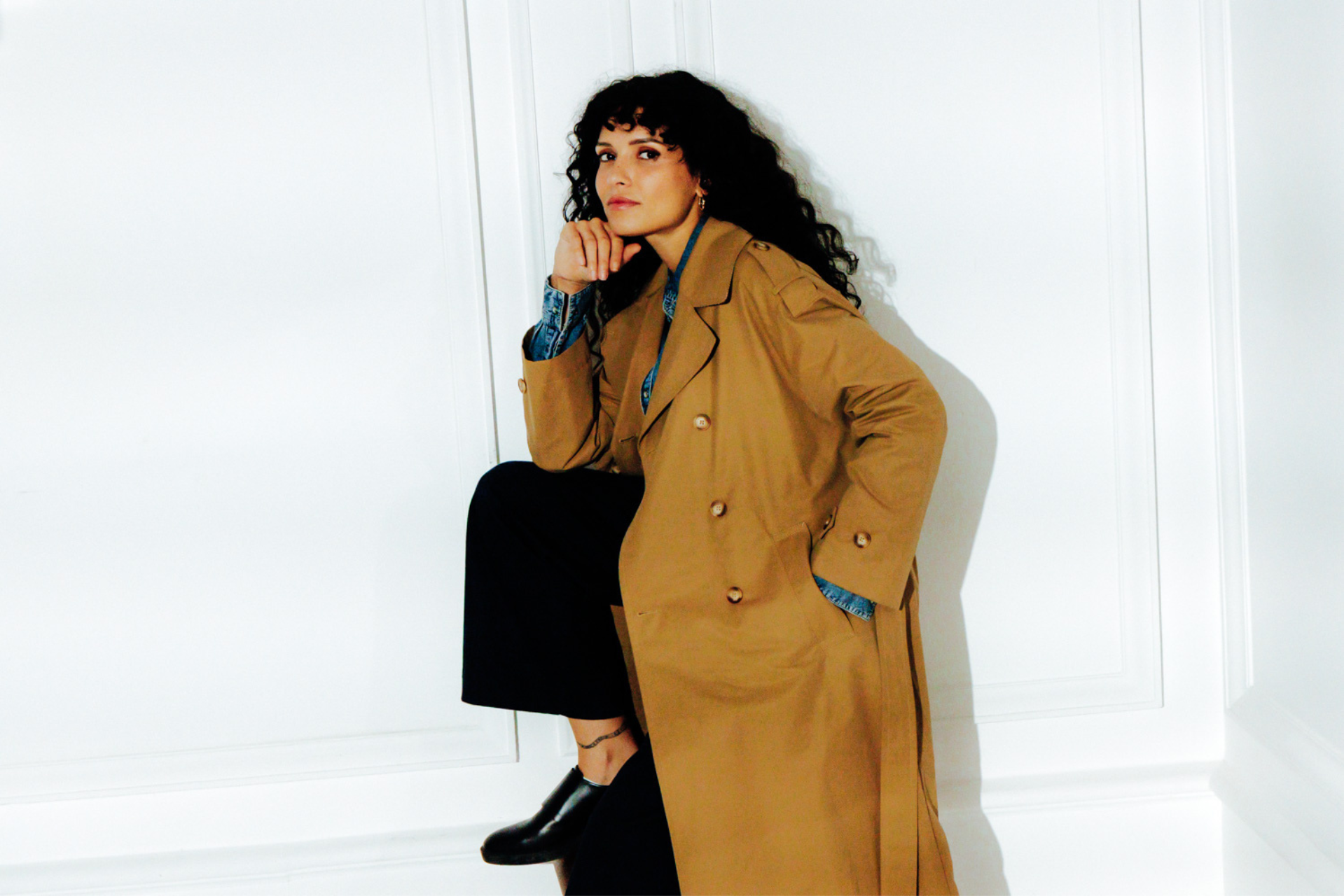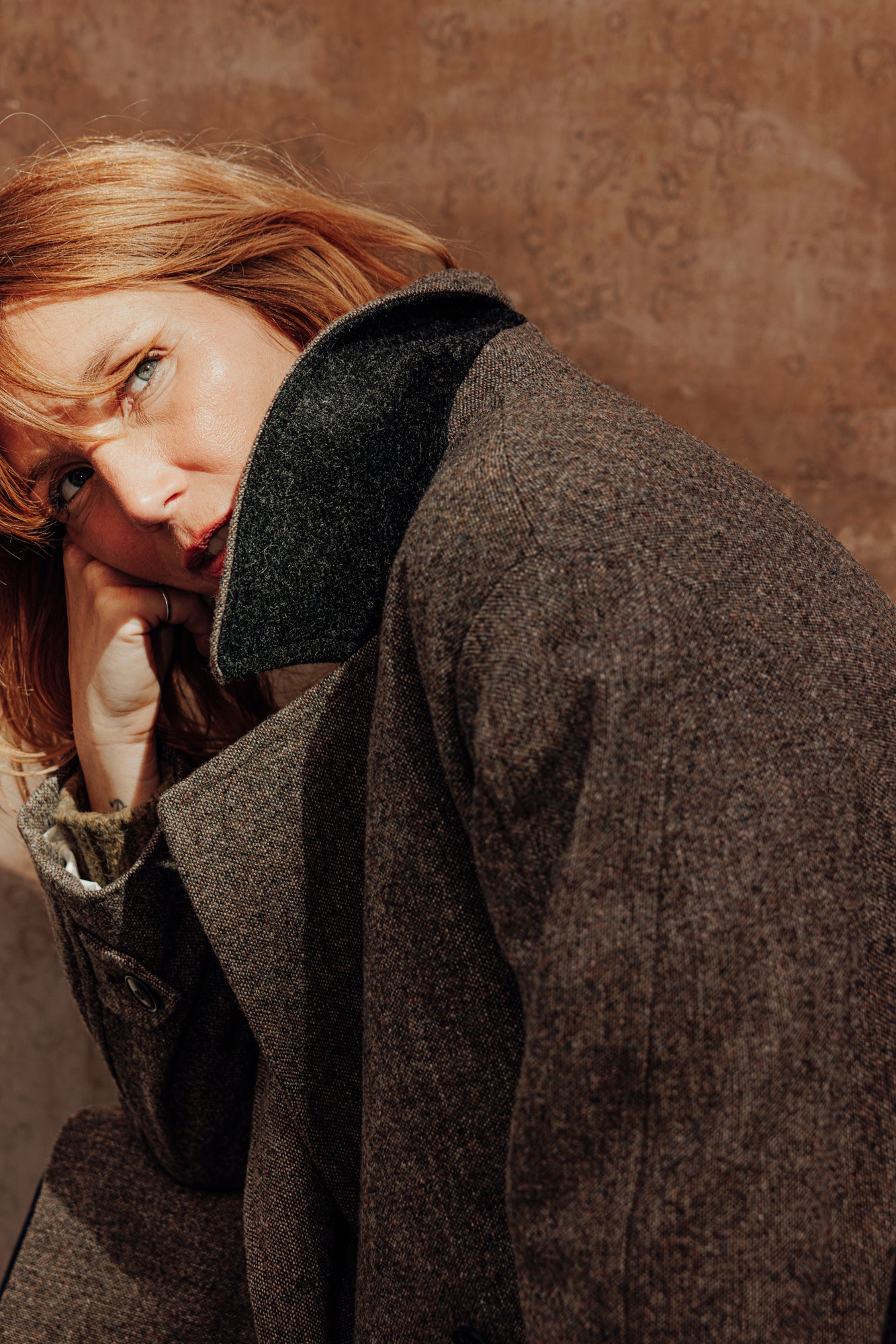

When looking for a warm and elegant coat, wool remains a safe bet. Naturally insulating, breathable, and durable, it has been a winter staple for generations. Yet, behind the word "wool" lie very different realities: virgin wool, alpaca, cashmere, mohair, and even bouclé do not offer the same properties or the same drape.
At Trench & Coat, a design studio brand specializing in coats, choosing a material is an essential stage in the development of a collection. For over 50 years, we have worked with the same Italian weavers to select fabrics recognized for their quality, structure, and durability. Discover also behind the scenes in our studios how each model is developed, from the first sketch to the prototype. Because a beautiful coat always starts with a beautiful material, we place as much importance on the fabric as on the cut or the finishes.
In this guide, discover how to choose a wool coat adapted to your needs, your lifestyle, and your expectations in terms of comfort.
Why does wool remain the go-to material for a coat?
If wool has been used for centuries in making coats, it is no coincidence. This natural fiber possesses remarkable properties that make it one of the most suitable materials for winter temperatures.
It naturally traps air, creating effective thermal insulation while letting the body breathe. Unlike some synthetic fibers, it limits damp sensations and helps maintain a comfortable temperature, even when weather conditions change.
Beyond its technical qualities, wool offers a structured drape that showcases the craftsmanship of the cut. It is this alliance of comfort, elegance, and durability that makes it the benchmark material for a quality coat even today.
Virgin wool, recycled wool, cashmere, alpaca, mohair... what are the differences?
Comparison table of the main materials
| Material | Warmth | Feel | Advantages | Ideal for |
|---|---|---|---|---|
| Virgin wool | ⭐⭐⭐⭐☆ | Soft and supple | Excellent insulation, good breathability, high durability | An elegant and durable everyday coat |
| Recycled wool | ⭐⭐⭐☆☆ | Varies by blend | Responsible approach, repurposing existing fibers | Those sensitive to environmental impact |
| Alpaca | ⭐⭐⭐⭐⭐ | Very soft and silky | High warmth, lightweight, exceptional comfort | Cold climates or those seeking extra warmth |
| Cashmere | ⭐⭐⭐⭐☆ | Very fine and luxurious | Incomparable softness, lightweight, high-end feel | A refined and comfortable coat |
| Mohair | ⭐⭐⭐⭐☆ | Slightly fuzzy | Lightweight, warm, adds texture to the fabric | Coats with a contemporary and textured style |
| Bouclé | ⭐⭐⭐⭐☆ | Plush and enveloping | Generous texture, cocoon effect, bold style | Winter coats with an elegant character |
At Trench & Coat, we never select a material solely for its level of warmth. Its drape, its ability to highlight the cut, its lasting shape, and its comfort are just as decisive. This is why we have worked with the same Italian weavers for over 50 years to develop fabrics that meet our standards for quality and durability.
Virgin wool: the balance between warmth and durability
Virgin wool comes from the first shearing of the animal and has never been recycled or processed before. It thus retains all the natural qualities of the fiber: elasticity, softness, strength, and insulating power.
It is the material most often found in high-end coats because it offers an excellent compromise between comfort, structure, and longevity.
Alpaca: lightweight warmth and a silky feel
Originating from the high plateaus of South America, alpaca fiber is prized for its softness and lightness. Added as a complement to wool, it provides more warmth without weighing the garment down and gives the fabric a particularly pleasant feel.
At Trench & Coat, alpaca is used when we are looking for a balance between thermal comfort, elegance, and fluidity of drape.
Cashmere: an exceptional fiber
Cashmere is renowned for its fineness and exceptional softness. Often blended with wool, it provides an extra sensation of comfort while maintaining a beautiful structure. Its rarity and production method explain its more high-end positioning.
Mohair: volume and character
Derived from the Angora goat, mohair is distinguished by its slightly fuzzy appearance and its ability to create fabrics that are both warm and light. It adds relief and a unique personality to coats with contemporary lines.
Bouclé: an iconic texture
More than just a material, bouclé refers to a type of weaving characterized by small loops that give volume to the fabric. Highly prized for its warm look and timeless style, it allows for the creation of enveloping coats with a particularly soft feel.
| Material | Our studio perspective |
|---|---|
| Virgin wool | Our reference for designing durable coats, offering a great balance between comfort, structure, and longevity. |
| Recycled wool | An interesting alternative when it comes from high-quality recycling and is combined with carefully selected fibers. |
| Alpaca | Ideal for adding extra warmth and softness without weighing the coat down. |
| Cashmere | A precious fiber that enriches the feel and comfort when integrated with precision. |
| Mohair | Adds relief, lightness, and a unique texture to certain fabrics. |
| Bouclé | An emblematic texture that offers a cocoon effect and a timeless style. |
Is a warmer material necessarily better?
It is tempting to think that the warmest coat is necessarily the best. In reality, it all depends on your use.
For daily commutes in the city, a virgin wool coat will generally offer an excellent balance between warmth, breathability, and comfort. If you live in a colder region or are looking for extra softness, a blend incorporating alpaca or cashmere may be particularly interesting.
Within our studio, we always select materials based on the model's silhouette, its drape, and its intended use. A beautiful material is not appreciated only by its insulating power, but also by its ability to maintain its elegance over the seasons.
Choosing a material is only one step in the design of a coat. To understand how a model comes to life, discover the manufacturing secrets of a coat, from fabric selection to prototype development.
How to care for a wool coat?
A quality coat is designed to last. A few simple steps can help preserve its qualities for a long time.
After each use, let it air out on a suitable hanger so that the fibers naturally regain their shape. A gentle brushing also helps remove surface dust. When cleaning becomes necessary, opt for professional care to respect the characteristics of the material.
Proper care helps maintain both the appearance of the fabric and the quality of its drape. Beyond the material, the finishing details play an essential role in a coat's durability. We explain why in our article dedicated to the finishes that make a coat last.
Which coat to choose according to your usage?
The best coat is, above all, the one that fits your daily life.
For urban use, a composition made primarily of virgin wool offers excellent versatility. If you are looking for more softness and warmth, blends incorporating alpaca or cashmere are a particularly comfortable alternative. Finally, bouclé fabrics are appealing for their generous texture and bold style, ideal for those who wish to combine elegance and character.
Beyond the material, also take into account the cut, length, and finishes. It is these elements combined that will make your coat a piece you will enjoy wearing year after year.

Our studio's advice
We choose our fabrics long before designing a collection. For over fifty years, we have worked with the same Italian partners, whose expertise allows us to develop materials that are beautiful, durable, and adapted to our requirements for cut. A quality coat is always born from this meeting between a carefully selected material and precise pattern-making.
Good to know
A composition indicating 100% wool is not automatically synonymous with higher quality. The origin of the fiber, the quality of the yarn, the weaving, the finishes, and the construction play an equally important role in the durability and elegance of a coat.
FAQ
Is virgin wool warmer than regular wool?
Virgin wool retains all the natural properties of the fiber. It generally offers better elasticity, good thermal insulation, and excellent durability.
Why add alpaca to a coat?
Alpaca provides more softness and warmth while remaining lightweight. It is often combined with wool to improve comfort without weighing the coat down.
Is cashmere essential?
No. Cashmere provides a very soft feel, but a high-quality virgin wool coat remains an excellent investment.
How to recognize good wool?
Beyond the composition, observe the drape of the fabric, its density, its softness, and the coat's finishes. These elements are often indicative of its quality.
Which wool coat to choose for daily use?
A virgin wool model with a timeless cut and neat finishes generally represents the best compromise between comfort, elegance, and durability.
Choosing a wool coat is primarily about understanding what lies behind its composition. Virgin wool, alpaca, cashmere, or bouclé each have their specificities, but a beautiful material only reveals its full potential when associated with a precise cut and demanding finishes.
At Trench & Coat, we are convinced that a coat is a lasting investment. This is why we place as much importance on the choice of our fabrics as on the development of each model in our studio. If you would like to delve deeper, also discover our guide on how to recognize a quality coat, where we detail the elements that distinguish fine craftsmanship.